End of Abyss Lore and Facility History: The Complete Deep Dive (2026)
Let me get one thing out of the way: I haven’t played End of Abyss yet. Nobody outside the studio and a handful of preview folks really has. With the October 1, 2026 release about a week away, all I have is trailers, developer commentary and a lot of late-night forum reading. But I’ve been covering horror games long enough to know that a game’s world often gives itself away before launch, if you know where to look.
And End of Abyss is giving itself away everywhere.
Why This One Grabbed Me
Some context first. The game comes from Section 9 Interactive, a small independent studio out of Malmö, Sweden. It was founded by Mattias Ottvall, Marcus Ottvall and Gustaf Heinerwall, veterans who previously helped shape the look of Little Nightmares. Epic Games Publishing is backing it. It’s a top-down sci-fi horror game with Metroidvania bones, and you play as Cel, a young combat technician sent into a huge, rotting underground compound to figure out what’s causing strange “disturbances.”
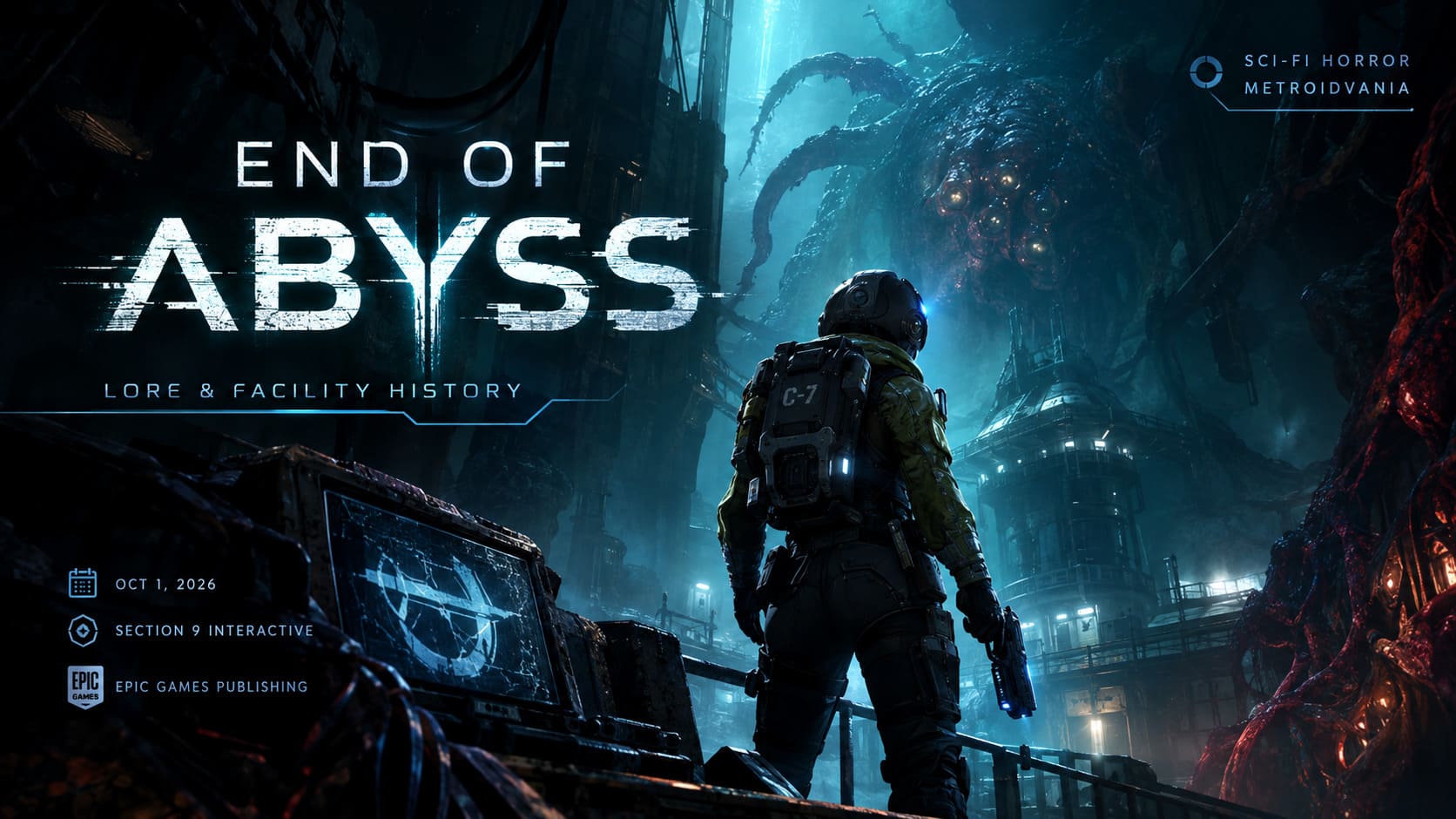
That’s a lean pitch, and I like lean pitches. Give me a clear premise and a strong sense of place, and I’ll happily fill in the dread myself.
Here’s the quick snapshot before I start theorizing:
| Detail What We Know | |
|---|---|
| Release date | October 1, 2026 |
| Developer | Section 9 Interactive (Malmö) |
| Publisher | Epic Games Publishing |
| Perspective | Top-down |
| Genre | Sci-fi horror with Metroidvania structure |
| Protagonist | Cel, a combat technician |
| Setting | A decaying subterranean facility in a ruined, abandoned world |
The Facility Is the Main Character
I’ll say it plainly: in this game, the place is the story. Everything the developers have shown, and everything the level and environment artists have talked about, points to a sprawling, multi-tiered industrial and scientific complex buried far below the surface. Snapped pipes. Rust-eaten consoles. Control rooms that look like people walked out mid-shift and never came back.
That last detail is what sells it. A ruin that has simply aged is sad. A ruin that looks interrupted is frightening. Whatever happened here happened fast, and it happened years before Cel ever shows up.
What really got my attention was a theory floating around the ResetEra threads, and honestly, I think it’s onto something. The architecture reportedly changes as you descend. The upper zones are standard industrial spaces: corridors, machinery, the boring bones of a working facility. Go deeper and things get stranger. Straight lines give way to cavernous spaces, and walls start to look fused with organic overgrowth.
If that’s right, it tells us something important about the compound’s history:
- It was built downward on purpose. You don’t excavate this deep by accident.
- It may have been built around something. The most unsettling reading is that the facility was raised to study, exploit or contain an anomaly that was already down there.
- The rot isn’t just decay. It looks like a takeover, and the deeper you go, the less the place belongs to the people who built it.
I love this kind of design because it lets the map itself tell you the truth. You don’t need a cutscene to know you’re descending into something that was never meant to be found.
“The Signal Has Been Listening”
Then there’s the tagline, which has been bouncing around the trailers: “The signal has been listening.”
Read that again. Not “the signal has been broadcasting.” Not “the signal has been spreading.” Listening.
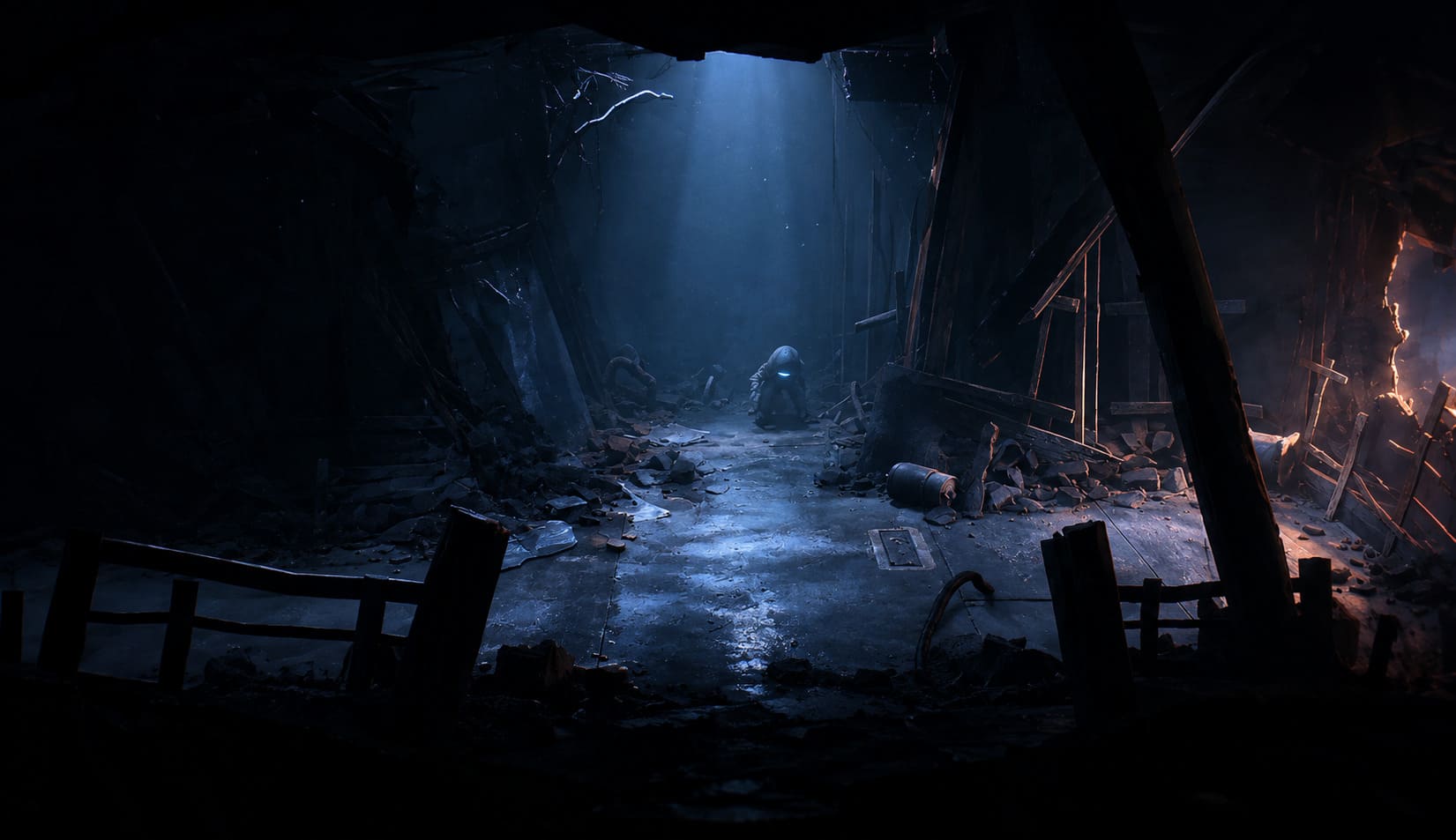
That single word changes the whole threat. A monster outbreak is a mess you clean up. Something that has been quietly paying attention, to the facility, to its people, maybe to the surface world, is a completely different kind of problem. It implies patience and intent. It implies that whatever is down there isn’t just reacting to Cel’s arrival. It may have been waiting for someone like her.
Add the line from the trailers, an echoing voice saying “We will end it. This abyss. Do you wonder? Why they sent us here?”, and my alarm bells go off. That last question is the one I can’t shake. Why were they sent here? The people directing Cel’s mission are on the surface, having detected energy disturbances and structural anomalies in the deep. But the way the trailers frame it, I strongly suspect Cel isn’t the first expedition, and that her superiors know more than they’re admitting.
I could be wrong. Horror marketing loves a good misdirect. But “the people who sent you already know what’s down there” is one of the oldest and most effective tricks in the genre, and Alien fans will recognize the shape of it immediately.
The Things Living Down There
Let’s talk monsters, because that’s where the game’s identity really shows. The creature design mixes body horror with mechanical and aquatic elements, and the influence of Alien and The Thing is impossible to miss. Based on official previews and boss-fight footage shared by outlets like Game Informer, here’s what’s been revealed so far:
- Bipedal monstrosities. Twisted, humanoid figures stalking the dark corridors. I read these as what’s left of the facility’s original workers and scientists.
- Spider-like hand creatures. Fast, multi-limbed things that look like severed hands crossed with arachnids. Ambushes in tight corridors are going to be nasty.
- Fleshy centipedes and leeching anomalies. Big segmented organisms slithering through vents and broken piping.
- Many-eyed fish and aquatic horrors. The lower levels are flooded, so expect submerged chambers guarded by mutated predators.
What I find most interesting is not the roster but the behavior. These creatures reportedly don’t act like ordinary wildlife. They seem tied to the facility’s geometry, almost like an automated defense system, or an extension of the Abyss itself trying to keep Cel away from the core.
That’s a smart way to do enemy design. When your monsters feel like part of the environment rather than random inhabitants, every room stops feeling like a level and starts feeling like an organ.
Cel Isn’t Your Typical Horror Protagonist
Here’s a design choice I genuinely appreciate. Cel is a combat technician, not a soldier, not an everyday civilian. That title does real work in both gameplay and story.
Her pistol has unlimited reserve ammo but runs on a strict overheat-and-cooldown clip system. So you’re never really out of bullets, but you’re constantly out of time. That’s a cleverly tense trade-off, because it swaps the usual “count your ammo” anxiety for “manage your rhythm” anxiety.
And she isn’t just there to shoot. Her job involves:
- Restoring power to dead sub-stations
- Clearing biological blockages from mechanical gears
- Interfacing with corrupted computer terminals to open deeper sectors
I like this a lot. A technician who fixes her way forward fits the setting far better than a lone gunslinger blasting through corridors. It also means the story delivery is naturally baked into progression: every terminal and data log she recovers reportedly sheds light on the facility’s final days, the rising panic of the staff as systems failed and the walls began to “bleed” the organic matter of the Abyss.
Metroidvania Storytelling Done Right (Hopefully)
The Metroidvania structure is the part I’m cautiously most excited about. As Cel gains upgrades to her suit and weapon, she can backtrack and open blast doors or breach collapsed zones that were previously locked away.
Why does this matter for lore? Because backtracking is a storytelling tool. When you return to a place you already saw with new abilities, you also return with new understanding. A ruined cafeteria, a shattered containment cell, a lab full of broken glass and strange chemical residue: none of these need a narrator. They just need you to come back and notice what you missed the first time.
That’s environmental storytelling at its best, and it’s a philosophy the developers have clearly committed to. Rather than drowning us in cutscenes, the narrative lives in the level design. I’d take that over a forty-minute exposition dump any day.
My Honest Concerns
I don’t want this to read like a fan letter, so here’s where I’m keeping my skepticism:
- Mystery boxes can be empty. “The signal has been listening” is a fantastic hook, but hooks are easy. Payoffs are hard. I want a reveal that earns the build-up.
- Familiar influences cut both ways. Alien and The Thing are great touchstones, but I hope the game finds its own voice instead of leaning on homage.
- Lore-heavy games can over-explain. The scariest version of this story keeps some things unexplained. If every terminal answers a question, the Abyss stops being an abyss.
None of that is a knock against the game. It’s simply what I’ll be watching for once it’s actually in my hands.
End of Abyss System Requirements: PC Specs, Performance Guide, and Optimization
The Bottom Line
Everything I’ve seen suggests End of Abyss understands what makes sci-fi horror work: a specific, believable place, a threat with intelligence behind it, and a protagonist whose skills match the world. A facility built downward around something ancient, a signal that listens instead of shouts, and a mission that smells like a cover-up. That’s a strong foundation for a story.
Whether the final game sticks the landing, I can’t say yet. But with the launch just days away, I’ll be down there on day one, flashlight on, pistol cooling, asking the same question the trailer keeps whispering: why did they really send us here?
I’ll report back once I’ve seen how deep the rabbit hole goes. Until then, tell me your theories in the comments. Is the Abyss a natural anomaly, or something someone made?