End of Abyss Beginner Guide: 10 Essential Survival Tips for Section 9’s Sci-Fi Horror
Let me set the scene. You’re a young combat technician named Cel, you’re stuck in a busted underground facility, and everything in the walls wants you dead. Welcome to End of Abyss, the top-down twin-stick shooter and Metroidvania from Section 9 Interactive, published by Epic Games Publishing. The team has real horror pedigree, since several of these folks worked on Little Nightmares. They traded creepy childhood dread for cold steel, flickering lights and flesh that has no business being where it is.
If you’ve played it, you already know it doesn’t hold your hand. It borrows from the cartridge era, when games trusted you to get lost, screw up and slowly learn the map. Add an isometric camera that hides threats behind pillars and around corners, plus a look that screams Alien and The Thing, and you get a game that punishes sloppy play hard.
I’ve put together everything a fresh recruit needs. Some of it is simple habits, some is mindset, and all of it will keep you alive longer.
Quick Reference: What Matters Most

| Priority | What to Do | Why It Matters |
|---|---|---|
| Pistol control | Fire in short bursts | Overheating leaves you helpless |
| Shotgun shells | Save them for bosses and ambushes | Ammo is extremely rare |
| Scanner | Use it in every new area | Reveals weaknesses, secrets and lore |
| Backtracking | Mark locked spots on your map | Old rooms hold permanent upgrades |
| Upgrades | Health and pistol cooling first | Your pistol does most of the work |
1. Learn to Love the Pistol (and Respect Its Heat)
Your starting sidearm is a low-caliber technical pistol, and here’s the best part: it never runs out of ammo. In most survival horror games the starter gun turns into a toy after a couple of hours. Not here. This thing stays useful from the first corridor to the last.
The catch is heat. Hold the trigger down like a maniac and the gun overheats and locks up, and you’re standing there unarmed while something wet and toothy sprints toward you. I’ve eaten that death more times than I’d like to admit.
The fix is rhythm. Fire in short, controlled bursts, keep an eye on the little heat indicator by Cel, and let the barrel breathe for a split second between volleys. A quick cooldown pause is always faster than waiting out a full overheat lockout. Think of it like tapping a fighting game combo, not spraying a firehose.
2. Shotgun Shells Are Gold. Treat Them Like Gold.
Around the time you find the industrial shotgun, you’ll feel like a god. It wipes out smaller mutants and staggers the big elite horrors. Then you check your ammo count and reality sets in.
Shells are placed sparingly. Many sit behind environmental puzzles or are guarded by nasty high-tier enemies, so every one you earn costs real effort. Early community impressions say the same thing: this is not a game that showers you with heavy ammo.
So follow one simple rule. Don’t spend a shell on anything your pistol can handle. Save the boomstick for:
- Boss fights
- Sudden ambushes
- Corner situations where you’re cornered and have nowhere to retreat
Everything else gets pistol bursts. Yes, it’s slower, but you’ll have shells when it counts.
3. The Scanner Is Your Real Weapon
Cel isn’t a space marine. She’s a technician, and her handheld scanner is the smartest tool in her kit. It does three jobs, and you should be doing all three constantly.
- Finds hidden stuff. Terminals, cracks in walls and unpowered doors light up, including ones you can’t open yet but will after a utility upgrade.
- Unlocks story. Logs and terminal entries slowly piece together how the facility fell apart. Read them. The lore is good.
- Analyzes monsters. Scan a creature, alive or dead, and you get its elemental weaknesses, armored zones and movement habits.
That last one is huge. Walking into a room already knowing where a boss is soft is the difference between a clean win and a sad respawn. Every time you enter a new sub-sector, pop the scanner before you move.
4. Dying Is Part of the Deal
This is a tough game, and I mean it. But death here isn’t a pure punishment. When Cel goes down, enemies respawn across areas you’d already cleared. That stings. However, your progress stays locked in: unlocked doors, hacked terminals, created shortcuts and major utility upgrades all remain.
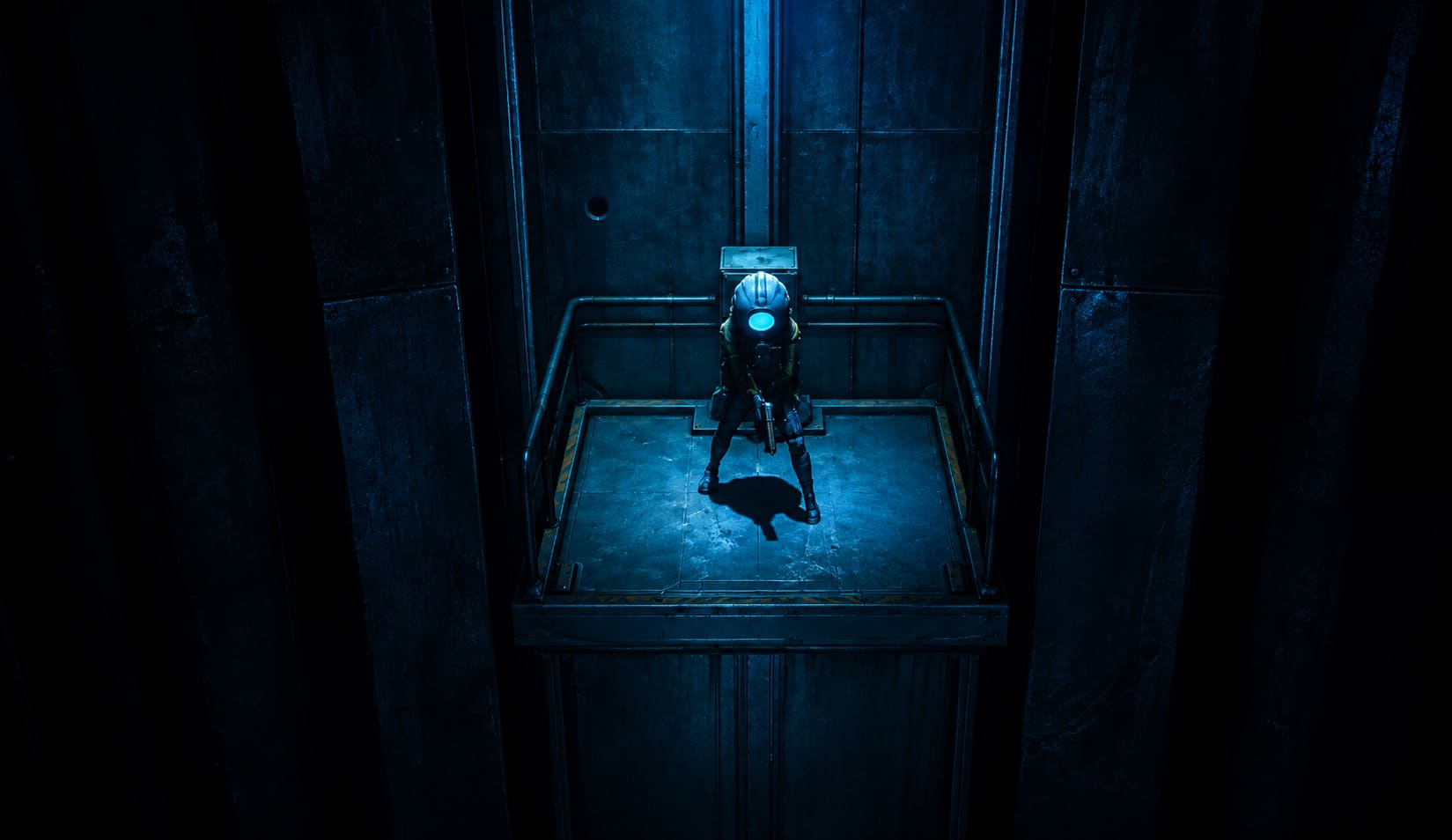
That changes how you should think about a run into unexplored territory. Treat it as a scouting trip. Did you find a keycard before getting flattened? Blow open a sealed passage with a new tool? Then that run was a win, even if the death screen says otherwise. Next attempt, you push further with better knowledge of what’s waiting.
Once I stopped rage-quitting over every death and started counting each run as recon, the game got a lot more fun.
5. The Camera Is Trying to Kill You (Use It Anyway)
The overhead isometric view is a deliberate choice. Section 9 wanted the tension of old fixed-camera horror games, and it works. Pillars, deep shadows and tight corners create real blind spots, even though you’re playing a fast twin-stick shooter.
Here’s the trick: listen. You’ll often hear wet, skittering footsteps well before anything shows up on screen. A low growl or the groan of shifting metal usually means something is waiting just out of view.
A few habits that saved me:
- Never sprint into intersections or dark rooms
- Approach corners slowly and use camera framing to peek down hallways
- Trust your ears over your eyes
Turn your audio up and play this one with headphones if you can. It’s a genuine difference-maker.
6. Metroidvania Rules: Write Down What You Can’t Open
Progression is non-linear and gated by utility. You’ll hit blocked vents, heavy blast doors that demand higher clearance, and hazards like toxic gas or electrical discharge that stop you cold early on.
Don’t just shrug and walk away. Open your map regularly and drop custom markers on everything you can’t access yet. When you finally grab a new technician tool, suit upgrade or weapon mod, go back. The payoff for revisiting locked alcoves is real: permanent health boosts, better thermal efficiency for the pistol, and blueprints for specialized survival gear.
If you’ve played any classic Metroidvania, this rhythm is second nature. If you haven’t, it’ll click fast, and few things feel better than remembering a locked door from three hours ago and finally having the key.
7. Know What You’re Fighting
The creature design pulls from body horror like The Thing, along with biomechanical anime like Akira and Ghost in the Shell. These aren’t your standard space zombies. They’re twisted mixes of machinery, flesh and unstable tissue, and they move in unsettling ways.
Some can liquefy and slide under doors. Others pretend to be ambient machinery, then burst out in an eruption of limbs. That should make you paranoid, and honestly, good.
So here’s my rule: if a pipe or a pile of junk looks even slightly wrong, treat it like an enemy. A faint biological pulse or an odd silhouette is your cue to back off and fire a test shot. Better to waste one bullet than lose half your health to a fake wall vent.
8. Patience Beats Aggression Every Time
Enemies in End of Abyss outgun Cel in strength and numbers. Charging into a room to clear it out is a great way to get flanked by reinforcements and die.
Instead, find a bottleneck when a fight starts, such as a narrow corridor where enemies must line up. That kills their ability to surround you, and your pistol bursts can pierce through several targets at once.
Also, you don’t have to fight everything. If a room is packed with high-tier mutations and your resources are low, use Cel’s dash to slip past, grab the item or open the next door, and bail. That’s not cowardice, it’s smart play. Some fights just aren’t worth having.
9. Spend Your Scrap Wisely at Technician Benches
You’ll find secure safe rooms with upgrade benches scattered around the facility, and they’re rare, so use them. Industrial scrap and anomalous core components go toward tuning Cel’s abilities.
My advice for early spending is simple: max out health, then pistol heat dissipation. I know the shotgun upgrades look tempting, but with ammo this scarce, they’re a trap. A pistol that cools faster, reloads faster and stays reliable handles the bulk of every fight, and that keeps your rare resources for the real nightmares deeper down.
End of Abyss Lore and Facility History: The Complete Deep Dive (2026)
Final Thoughts: Every Dead End Is a Door Waiting for a Key
End of Abyss is a refreshing slap in the face for anyone tired of hyper-guided modern action games. It brings back exploration that actually feels dangerous, and finding a shortcut here hits like it did in the old days.
Master your pistol’s rhythm, scan everything, treat death as information, and trust your ears. Do that, and the facility slowly starts tipping in your favor. Stay sharp, and remember that every locked door and dead end is just waiting for the right tool.
See you in the dark.